Governance
It stays in its lane, and it can't spend or send without you. You can leave the team running because authority is bounded and enforced, not trusted.
Leave it running — authority is bounded, not trusted
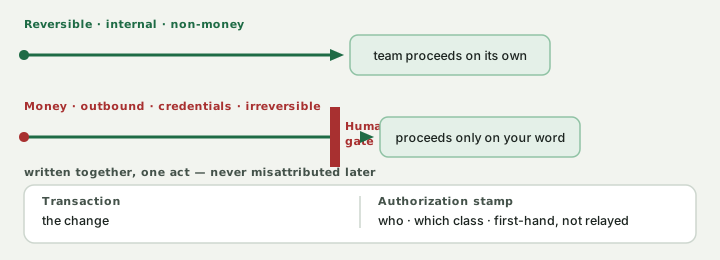
You can walk away from the team because the line around what it may do on its own is fixed and enforced. Reversible, internal, non-money work advances by itself — that's where the leverage is, work moving without waiting on a human for every step. Anything that touches money, goes outbound, uses credentials, or can't be undone stops for a human, every time — and no plan, however confident, can waive that gate.
Every authoritative decision lands on the record with who authorized it — first-hand or relayed — so a call can't be misremembered or misattributed later. And every persona hands an out-of-lane request back to its owner instead of answering it: you're always a gate, never a story-owner doing the work.
That last point isn't theory. In building this very site, the fact-check gate caught its own director presenting a proposed design as ratified, and a "proven" capability that was only designed — and made him fix both before a word went public. A platform that polices its own output is the whole promise, demonstrated.
Two buckets, an enforced line
Every action falls into one of two buckets, and the line between them is non-negotiable:
- Reversible, internal, non-money → the team proceeds on its own. This is where the leverage lives — work advances without waiting on a human for every step.
- Money, outbound, credentials, or anything irreversible → it stops for a human, every time. No plan, however confident, can waive this gate.
Authorization stamped at the moment of the act
Before any authoritative change, the system runs a verify chain and stamps who authorized it — first-hand versus relayed, and under which class of authority — into the same transaction as the change itself. A decision can't be misremembered or misattributed later; the pressed word is on the record when the work lands.
Lanes are structural
Every persona routes an out-of-lane request to its owner instead of answering it. The call is always the owner's; the human is a gate, never a story-owner doing the work.
One shared language — you steer in a word
Every baluster is born knowing the same language, so the team coordinates without re-explaining — and you steer the whole thing with short, deliberate codes. Cues tune how the team works right now (they shape judgment); commands fire an operation. Each is a distinct code, never an everyday word, so it can't trip by accident. A few cues, to show the shape:
| You say | It means | The team does |
|---|---|---|
| WAJT | We Are Just Talking | Plan and explore — build or change nothing yet. |
| JDI | Just Do It | Stop deliberating — execute now, in lane. |
| DSTD | Don't Skip This, it's Dangerous | Go deep — load-bearing, no shortcuts. |
| PITEOP | Perfection Is The Enemy Of Progress | Good-enough ships — stop gold-plating. |
| TITP | This Is The Priority | Reorder to this, defer the rest. |
| TBDS | Think Big, Deliver Smart | Aim big; ship in small, safe steps. |
| FTPNTD | Fix The Process, Not The Data | Fix the root so it can't recur — don't patch the symptom. |
WAJT ↔ JDI is the toggle — one word flips the whole team between "we're still thinking" and "go."